
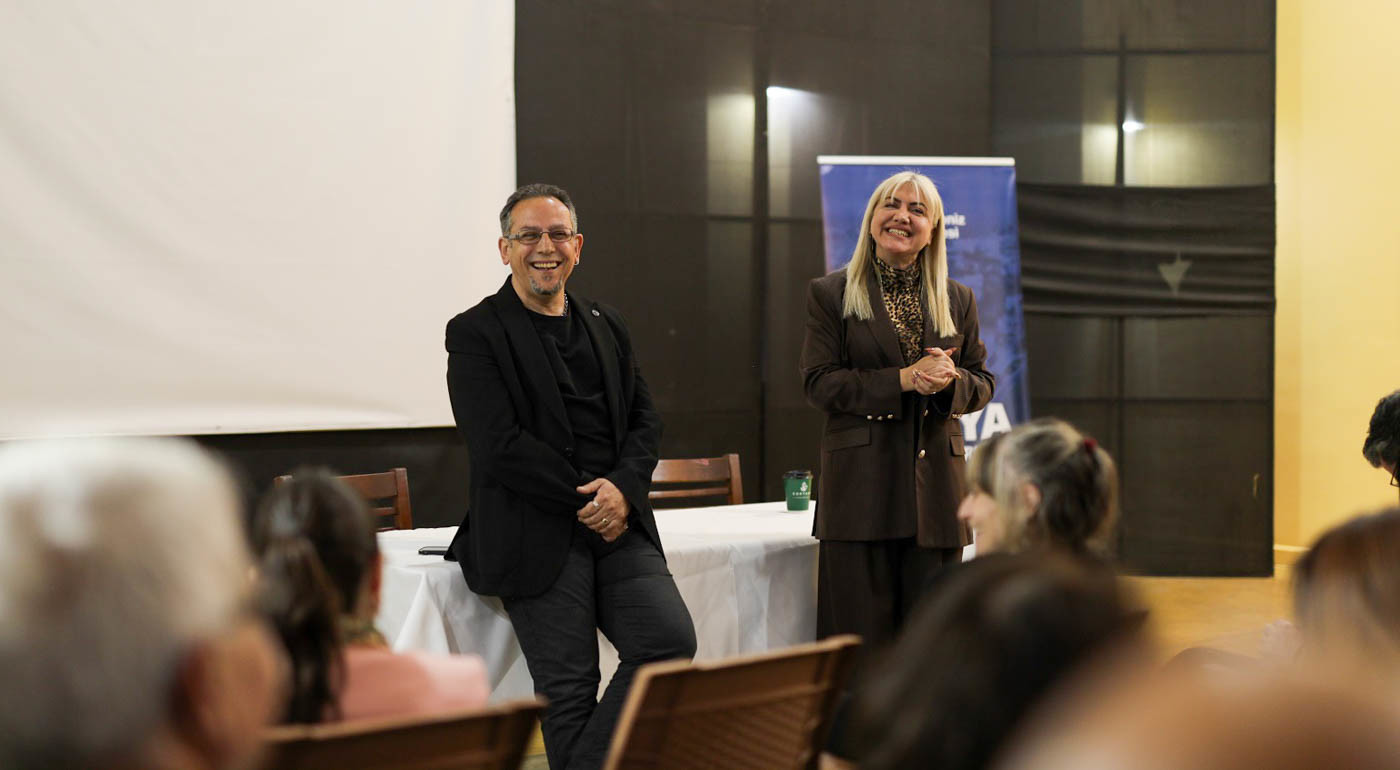
A new edition of Science Cafe events, organized by the Eastern Mediterranean University (EMU), Science Communication Office, was held at Famagusta Bandabuliya with communication sponsorship by North Cyprus Turkcell and contributions of Municipality of Famagusta. The issue of peer and cyberbullying, which is increasingly prevalent today and often progresses unnoticed, was addressed in all its dimensions during the event held with “Recognize, Prevent, Protect” theme. Through practical examples, EMU Faculty of Arts and Sciences member Prof. Dr. Fatih Bayraktar and EMU Faculty of Computer and Information Sciences member Dr. Yeşim Kapsıl Çırak highlighted forms of bullying that are commonly encountered in daily life yet frequently go unrecognized. The event garnered significant public attention and was attended by EMU Rector Prof. Dr. Hasan Kılıç, Vice Rector Prof. Dr. Ali Öztüren, as well as academic and administrative personnel.

“Power-Seeking and Lack of Empathy Underlie Bullying Behaviors”
During the talk, peer and cyberbullying were defined, and their similarities and differences were examined. Particular emphasis was placed on the psychological effects experienced by victims, including anxiety, depression, loss of self-confidence, and social isolation. The speakers noted that bullying behaviors may be rooted in factors such as a desire for power and a lack of empathy, and highlighted that bystanders often tend to remain silent, which constitutes a significant area of concern.
As part of the event, cyberbullying was explained through examples demonstrating how it manifests through social media, messaging apps, and online gaming platforms. Speakers highlighted that digital footprints are lasting and play a key role in shaping one’s digital identity. They noted that every post, comment, and interaction can have long-term implications, stressing the need for greater awareness, especially among young people. The risks associated with anonymous accounts and fake profiles were also emphasized.
The session also explored strategies for preventing bullying at individual, family, institutional, and societal levels. Participants were encouraged to utilize tools such as blocking, reporting, and evidence collection, while the importance of open family communication and enhanced awareness initiatives in educational settings was underlined. The event concluded with an interactive discussion, allowing participants to share insights and experiences.