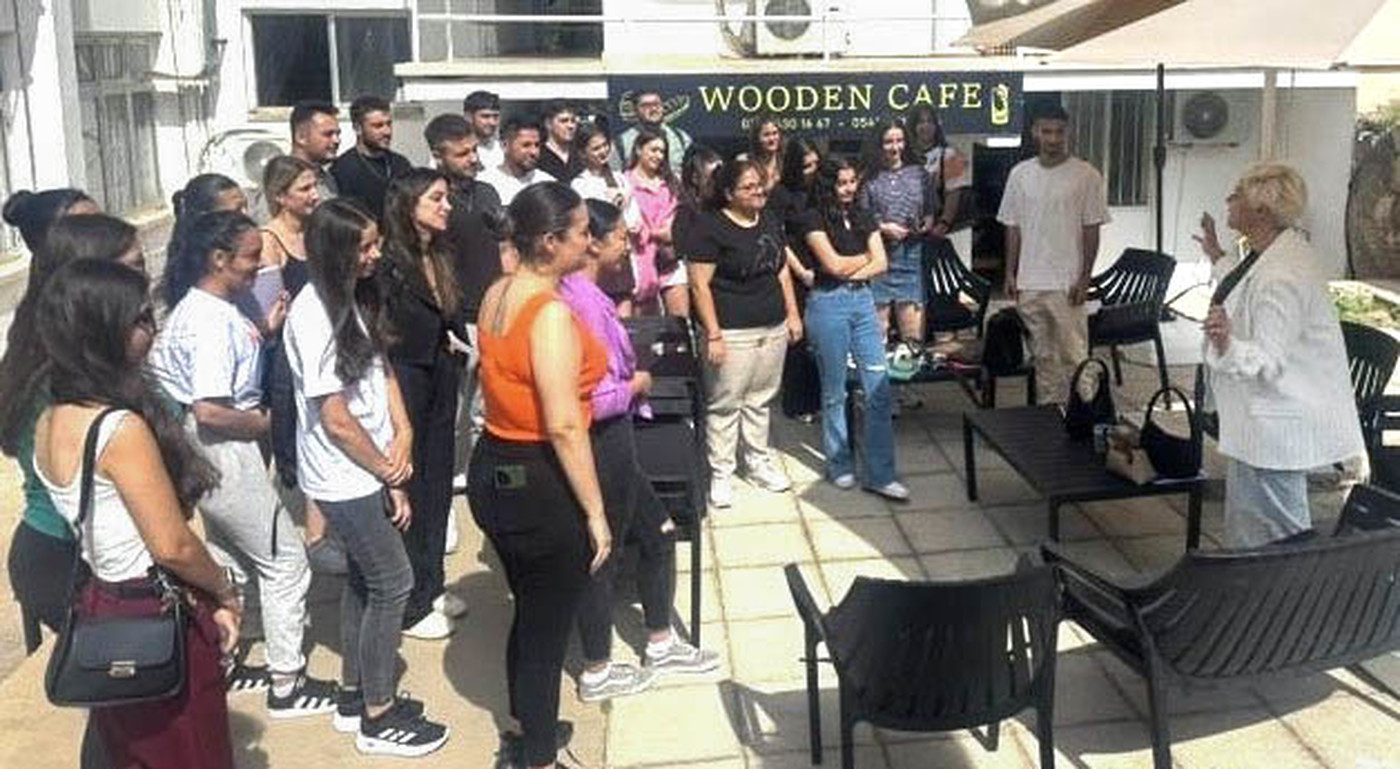
Eastern Mediterranean University (EMU), School of Computing and Technology (SCT), Accounting and Taxation Application Program organized an event titled “Bir Fincan Sohbet / A Cup of Chat” with the aim of gathering student feedback on expectations and suggestions, while also strengthening their sense of belonging.
Within the scope of the event, students gathered together with the program coordinator Assist. Prof. Dr. Güzide Atai and academic staff members and enjoyed a lovely atmosphere with a cup of coffee or tea. During the event, students had the chance to state their expectations and wishes related to the program. In her evaluations during the meeting, Assist. Prof. Dr. Atai emphasized that the feedback gathered from students offers valuable guidance for both ongoing activities and future planning. Assist. Prof. Dr. Atai also noted that the two-year program has held FIBAA accreditation since 2014, while the three-year program has been accredited since 2019, and that both programs continue to operate in alignment with the European Qualifications Framework.
Assist. Prof. Dr. Atai underlined that the FIBAA certification serves as affirmation that the quality of education provided in the programs has been approved by an independent external evaluation institution. She also emphasized that the Accounting and Taxation Applications Program at SCT maintains strict internal academic quality assurance procedures to uphold academic standards, noting that student feedback is especially crucial within this process.
Assist. Prof. Dr. Atai explained that to maintain internal academic quality assurance within the program, they make use of tools such as surveys, student meetings, and other interactive methods. She pointed out that feedback is gathered not only from students but also regularly from other stakeholders like employers and academic staff. Noting that the “Bir Fincan Sohbet” event was held as part of this ongoing feedback process, Assist. Prof. Dr. Atai also mentioned that, in addition to the end-of-semester university-wide student satisfaction surveys, they conduct “mid-semester surveys” after midterm exams to further reinforce the quality and reliability of the education offered. Furthermore, she added that the results of these surveys are used to make timely improvements in teaching practices and the learning environment within the same academic semester.
Stating that the students can use the anonymous suggestion boxes to share their complaints and concerns, Assist. Prof. Dr. underscored that these types of feedback and communication channels not only improve student satisfaction but also foster stronger connections between stakeholders and play a significant role in enhancing the overall quality of education.