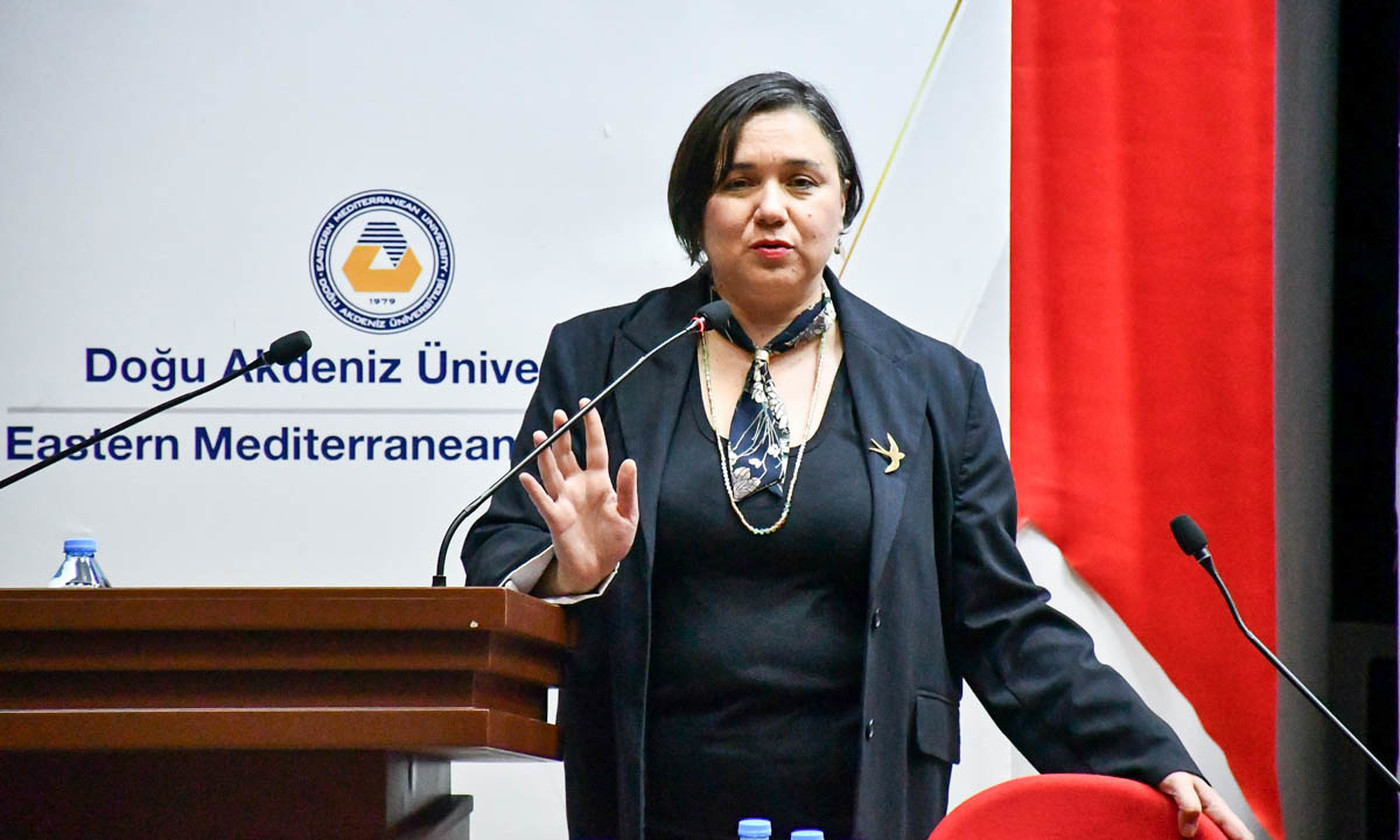
Eastern Mediterranean University (EMU), Arts and Sciences Faculty, Department of Biological Sciences organized a special event on the occasion of “DNA Day”. This year’s event held with the titled of “Use of Artificial Intelligence (AI) in Human Genetic Diseases” took place at the Mustafa Afşin Ersoy Hall and, was attended by academic personnel, students and everyone interested on DNA.
“To Create a Huge Difference”
Delivering the opening speech of the event, EMU Biological Sciences Department academic staff member Prof. Dr. Bahar Taneri noted that this year’s event is a milestone and that the AI will create a huge difference in the field of biological sciences. Saying; “Today, you will see that the change has already begun”, Prof. Dr. Taneri underscored that artificial intelligence offers unprecedented opportunities, especially in the processes of early diagnosis, detection, prevention, and treatment of human genetic diseases. Prof. Dr. Taneri highlighted that AI tools are currently being applied to a wide range of diseases, from neurogenetic conditions like Alzheimer’s and ALS to various forms of cancer. She also expressed her gratitude to the students who worked hard on the event despite the midterm exams period, adding, “This is a significant accomplishment for them”.
“We are at the Fore Front of Scientific Progress”
Also delivering a speech, Head of EMU Department of Biological Sciences Assist. Prof. Dr. Burak Ali Çiçek noted that this year’s theme, the use of Artificial Intelligence in Human Genetic Diseases, is one of the most thrilling and relevant topics in today’s scientific and ethical discussions. In his address, Assist. Prof. Dr. Çiçek pointed out two key changes. The first is the shift of science from being confined to laboratories to embracing a digital era through artificial intelligence, big data, and computational technologies. The second is the growing acknowledgment of female scientists, who were previously overlooked, now gaining the recognition they rightfully deserve. Assist. Prof. Dr. Çiçek mentioned that their department is at the forefront of scientific progress, making significant contributions to both academia and the future on local and global levels through research in genetics and artificial intelligence.
“Moving Forward Each Passing Day”
In his speech, EMU Faculty of Arts and Sciences Dean Prof. Dr. Mehmet Ali Özarslan underlined that the department, founded in 2011, serves as a leading example in academic excellence, interdisciplinary research, and commitment to international standards. Prof. Dr. Özarslan noted that this year’s DNA Day seminars addressed crucial areas such as molecular biology, genetics, bioinformatics, biotechnology, and the application of artificial intelligence in these domains. Emphasizing the importance of the event, he stated, “These seminars showcase both our academic vision and our strong connection to science in society.” He also pointed out that EMU is ranked among the top 400 universities worldwide in physical sciences by Times Higher Education. Concluding his remarks, Prof. Dr. Özarslan thanked everyone involved in the event and reaffirmed the department’s ongoing advancement in education and research.
“Revolutionary in Healthcare Field”
Delivering the opening speech of the event, EMU Vice Rector Prof. Dr. Osman M. Karatepe stressed that the discovery of the double helix structure of the DNA in 1953 marked a new era in molecular biology, underscoring this finding had a transformative impact not just on science but also on human health. Prof. Dr. Karatepe highlighted that DNA is the key molecule carrying the complete genetic information of living organisms and explained that, today, this information can be integrated with big data to develop more effective healthcare solutions. Prof. Dr. Karatepe pointed out that diagnosing genetic diseases now involves complex, multi-layered analyses powered by big data, with artificial intelligence playing a key role in delivering faster, more precise, and personalized diagnoses. He also emphasized that AI technologies have had ground-breaking contributions in areas such as cancer vaccine development, tumour detection, and genetic data analysis, revolutionizing healthcare.
Within the scope of the said event, the use of artificial intelligence technologies on the diagnosis and treatment of genetic diseases and, their role in predicting disease risks, and their contributions to personalized medicine were discussed. The impact of advances in health technologies on genetics were approached in detail through the presentations and discussions held.