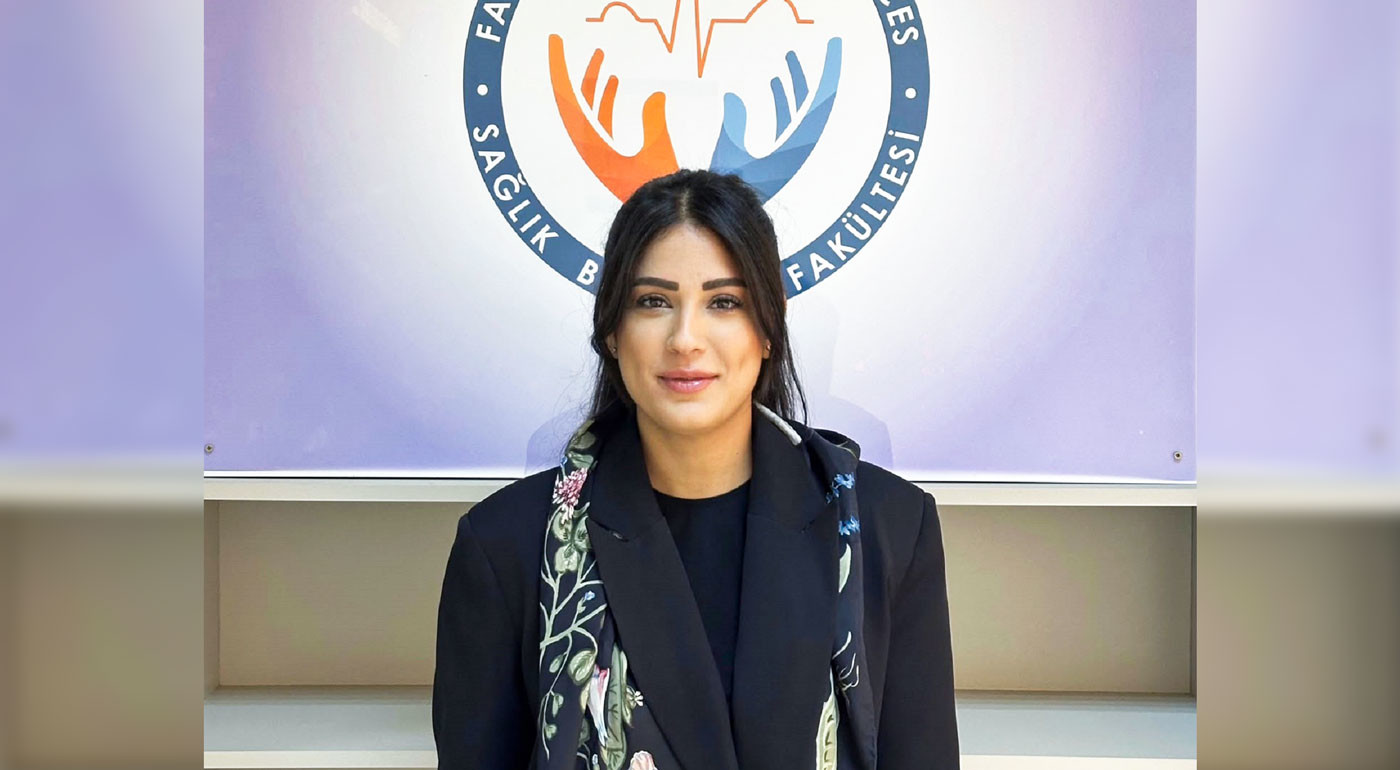
Eastern Mediterranean University (EMU), Faculty of Health Sciences, Nutrition and Dietetics Department Chair Asst. Prof. Dr. Gözde Okburan commented on breast cancer and nutrition. The statement released by Asst. Prof. Dr. Okburan reads as follows:
“Breast cancer continues to be the most commonly diagnosed cancer among women worldwide. According to data from the International Agency for Research on Cancer (IARC), an agency of the World Health Organization (WHO), approximately 2.3 million women worldwide were diagnosed with breast cancer in 2022. Data from the Ministry of Health of the Turkish Republic of Northern Cyprus (TRNC) indicate that breast cancer ranked first among cancer cases reported in women in the country in both 2019 and 2020.
Numerous factors beyond our control, such as age, genetic predisposition, and hormonal characteristics, play a role in the development of breast cancer. At the same time, lifestyle-related factors, including body weight and dietary habits, also influence the risk of developing the disease. Therefore, focusing on habits that we can modify in our daily lives is essential for reducing the risk of breast cancer. Nutrition plays a particularly important role in this regard. However, rather than focusing on individual foods, it is necessary to consider overall dietary patterns.
The Relationship between Obesity and Breast Cancer
The association between excess body weight and breast cancer is particularly pronounced in postmenopausal women. Following menopause, adipose tissue becomes one of the primary sources of estrogen production. An increase in body fat can lead to changes in hormonal and metabolic balance while also contributing to chronic inflammation. These changes are believed to influence the risk of developing breast cancer.
Therefore, maintaining a healthy body weight is one of the key controllable factors to consider in breast cancer prevention. The goal should not merely be to lose weight, but rather to achieve and maintain a healthy body weight over the long term.
The Role of Nutrition in Breast Cancer Prevention
When examining the relationship between nutrition and breast cancer, rather than asking, “Which foods can prevent cancer?”, we should first consider, “What are my overall dietary habits?” This is because the impact of nutrition on health is not determined by any single food, but rather by a combination of factors, including total energy intake, dietary diversity, fiber consumption, and the degree of food processing.
In this context, the Mediterranean diet stands out as one of the dietary patterns associated with breast cancer prevention. Characterized by a high intake of vegetables, fruits, whole grains, legumes, nuts, and olive oil, along with protein sources such as fish, and a limited consumption of red meat and highly processed foods, this dietary pattern has been supported by scientific evidence suggesting that it may help reduce the risk of developing breast cancer.
One of the noteworthy findings in this field came from a study published in the International Journal of Cancer in 2017. The study, which followed more than 62,000 women aged 55–69 in the Netherlands over a period of approximately 20 years, found that postmenopausal women who adhered more closely to the Mediterranean diet had an approximately 40% lower risk of developing estrogen receptor-negative (ER-negative) breast cancer. However, the study did not identify a similarly significant association with overall breast cancer risk or estrogen receptor-positive (ER-positive) breast cancer.
These findings highlight why dietary patterns should be evaluated within a broader context rather than focusing on individual foods. Labeling broccoli, turmeric, green tea, or any other food as a “miracle food” that prevents cancer goes beyond what current scientific evidence supports. The key lies in establishing a balanced, varied, and sustainable dietary pattern that incorporates a wide range of nutritious foods and can be maintained over the long term.
A comprehensive review published by the World Cancer Research Fund (WCRF) in 2025 further supports this approach. Strong scientific evidence suggests that adopting a combination of healthy lifestyle habits, including maintaining a healthy body weight, increasing physical activity, following a diet rich in vegetables, fruits, and dietary fiber, and limiting the consumption of red and processed meat and sugar-sweetened beverages, may help reduce the risk of developing breast cancer.
In short, when it comes to breast cancer prevention, the emphasis should be placed not on incorporating a single supposedly “protective” food into one’s diet, but rather on establishing a comprehensive pattern of healthy eating habits and maintaining these habits consistently over the long term.
Conclusion: Sustainable Habits Rather Than Individual Foods
Breast cancer is a multifactorial disease, and no single food or dietary pattern can completely prevent its development. However, maintaining a healthy body weight, following a balanced diet, adopting the key principles of the Mediterranean diet, limiting alcohol consumption, and incorporating regular physical activity into daily life can help reduce modifiable risk factors.
The key is not to add a single supposedly “protective” food to our diet, but rather to make healthy choices an integral part of our everyday lives. After all, a healthy lifestyle is not built on one good decision, but on the cumulative impact of healthy choices made consistently, day after day.
Eat well, live healthy.”