
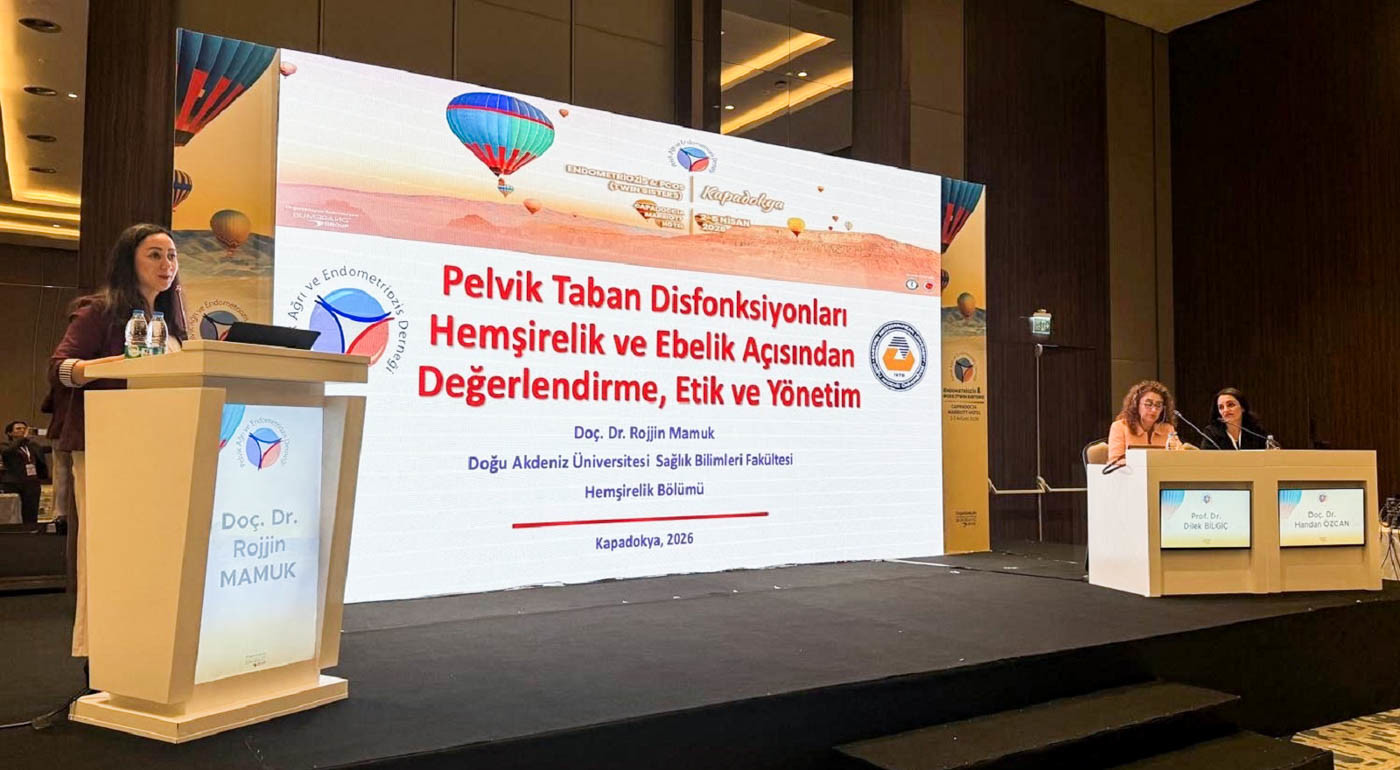
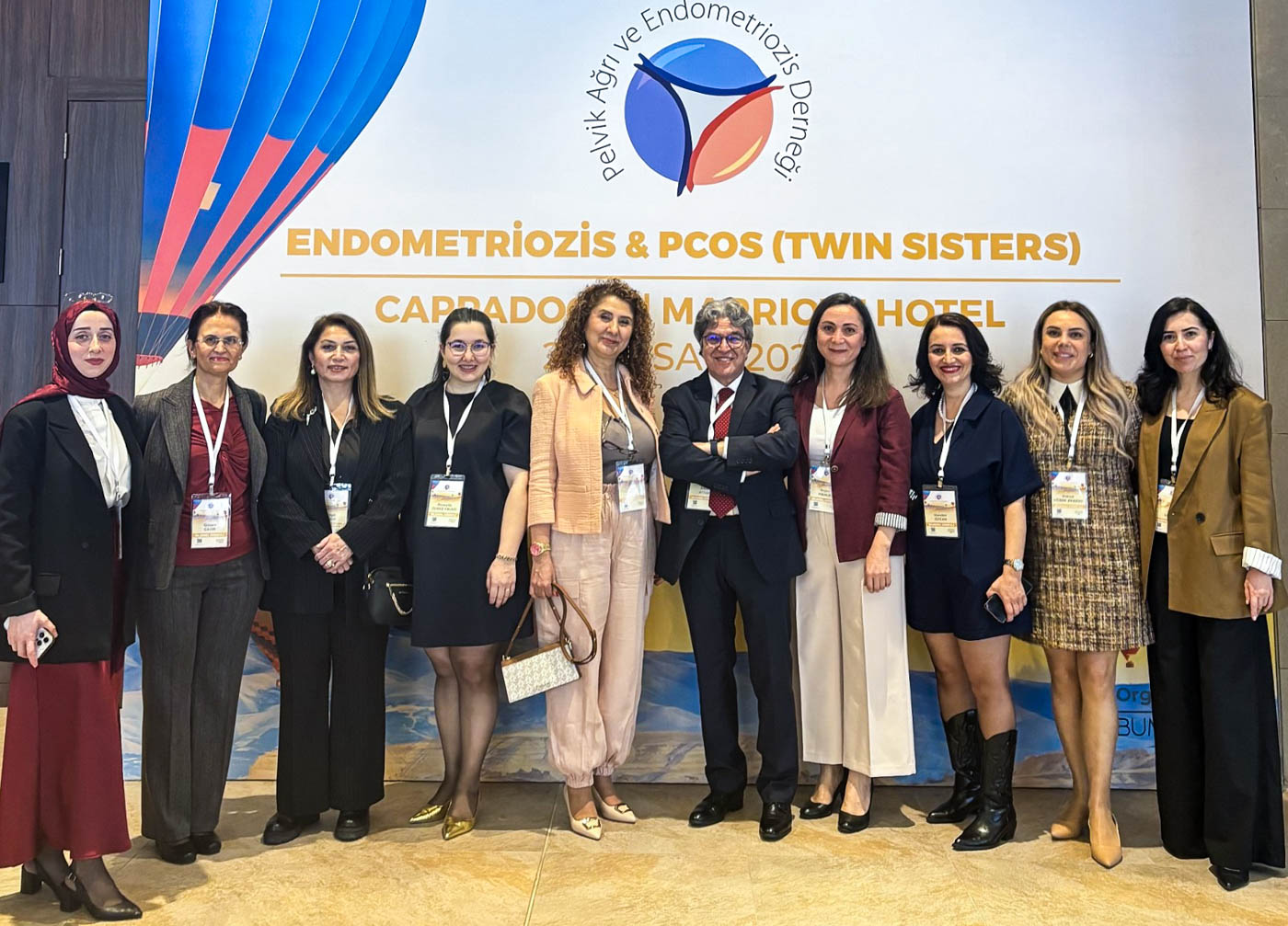
Eastern Mediterranean University (EMU), Health Sciences Faculty, Nursing Department academic staff member Assoc. Prof .Dr. Rojjin Mamuk successfully represented EMU at the “Endometriosis & PCOS (Twin Sisters) Congress” held in Cappadocia on 2-5 April 2026, organized in collaboration with the Pelvic Pain and Endometriosis Association, the Turkish Society of Endocrinology and Metabolism, and the Mesotherapy Association.
Delivering a presentation titled “Pelvic Floor Dysfunctions: An Evaluation from Nursing and Midwifery Perspectives, Ethics, and Management” at the event, Assoc. Prof. Dr. Mamuk highlighted their critical importance in women’s health. She underlined that these conditions are globally prevalent and constitute a major public health issue, especially among women. While often reduced to urinary incontinence, she explained that pelvic floor dysfunctions actually cover a wider clinical range, including pelvic organ prolapse, sexual dysfunction, and often undiagnosed chronic pelvic pain.
Underscoring the serious impact of chronic pelvic pain on quality of life, Assoc. Prof. Dr. Mamuk noted that it may also be a warning sign of conditions such as endometriosis, which can lead to infertility. She underscored the critical role of early awareness and diagnosis in pelvic floor disorders, stating that proper evaluation and guidance at an early stage make it possible to implement more effective, less invasive, and more cost-efficient treatments.
Assoc. Prof. Dr. Mamuk underlined that pregnancy, childbirth, and the postpartum period are critical for pelvic floor health, stressing the vital role of midwives in care during this time. She noted that nurses and midwives, as healthcare professionals in closest and most continuous contact with the community, play a key role in early detection. She added that pelvic floor disorders can be identified early through tools such as comprehensive patient histories, validated scales, bladder diaries, and basic laboratory tests. Assoc. Prof. Dr. Mamuk noted that, this approach both improves clinical outcomes and reduces the economic burden on the healthcare system.
Addressing the ethical dimension of pelvic floor dysfunctions, Assoc. Prof. Dr. Mamuk pointed out that although many women experience these conditions, they are frequently overlooked due to their non-life-threatening nature. She stressed that this should be seen as both a healthcare disparity and a gender-based injustice. Emphasizing that these issues cannot be resolved by a single discipline alone, Assoc. Prof. Dr. Mamuk highlighted the importance of a multidisciplinary and holistic approach. Dr. Mamuk added that such collaboration not only improves clinical outcomes but also supports the application of the ethical principle of beneficence.
The congress highlighted that raising awareness of pelvic floor health, promoting early diagnosis, and reinforcing multidisciplinary care models would improve individual quality of life while contributing meaningfully to public health.