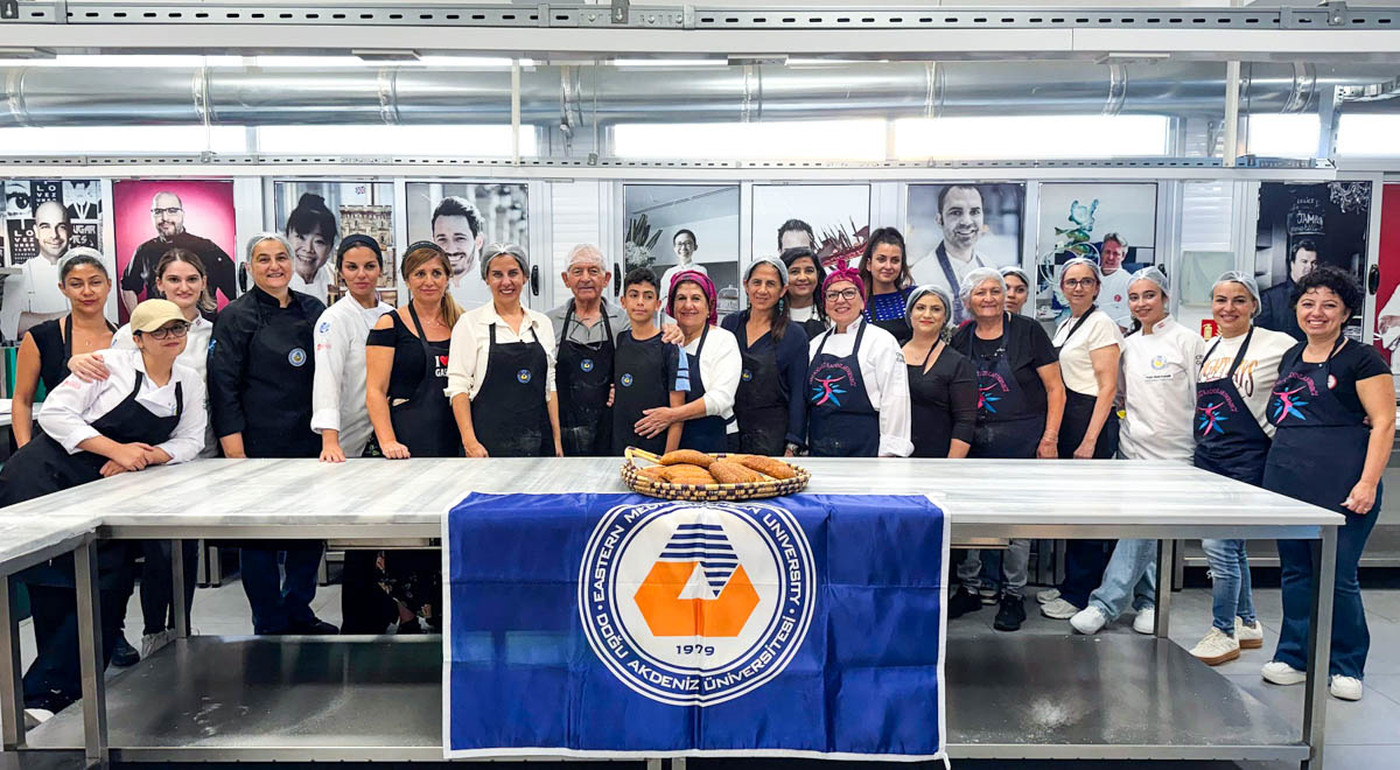
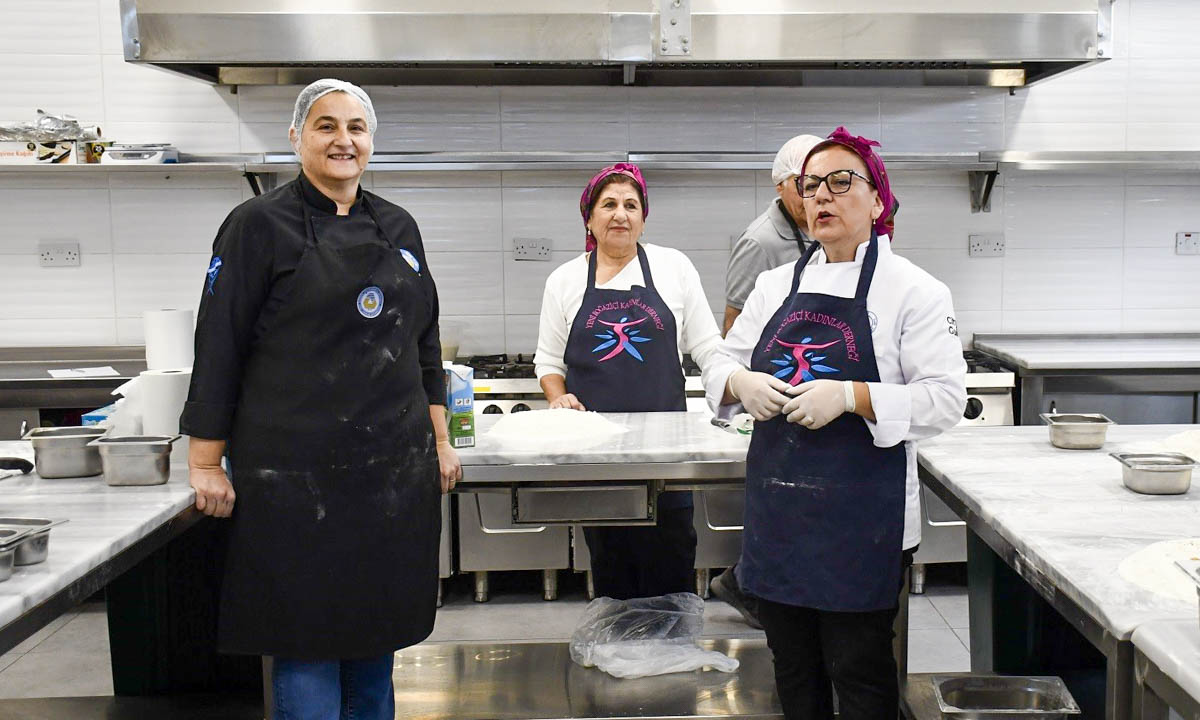
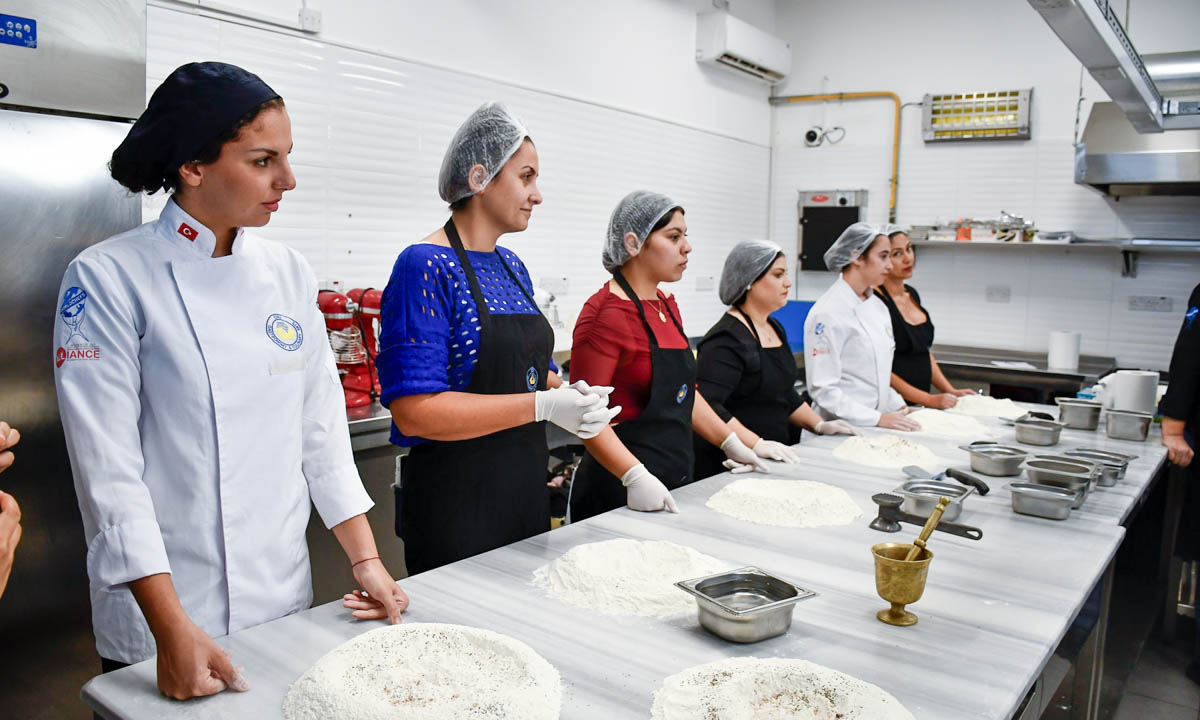
With the sponsorship of Yeni Boğaziçi Women’s Association, Eastern Mediterranean University (EMU), Faculty of Tourism and Community Involvement Center (CIC) organized a workshop event with the aim of promoting “Aytotoro Çöreği” recognized as one of the unforgettable cultural heritages of Cyprus. The workshop was led by Raziye Oyuncu, a board member of the Yeni Boğaziçi Women’s Association and recipient of the “Mother Earth” award from Slow Food Salamis in 2020, alongside her husband Güner Oyuncu. Participants had the opportunity to learn the traditional recipe of Aytotoro Çöreği, a regional specialty from Aytotoro Village, in a hands-on workshop guided by Chef Mine Adalıer, Instructor in EMU Gastronomy and Culinary Arts Program.
The said event saw participation from Acting Dean of EMU Faculty of Tourism Assist. Prof. Dr. İlkay Yorgancı, Vice Dean of EMU Faculty of Tourism Assist. Prof. Dr. Tuna Karatepe, EMU CIC’s Chairperson Assist. Prof. Dr. Nazenin Ruso Kandemir, Yeni Boğaziçi Women’s Association’s Chairperson Nazenin Taşçıoğlu Şahali, board members of the association, faculty members and students.
“A Cultural Treasure Loved by All”
In her speech, Nazenin Taşçıoğlu Şahali, Chairperson of the Yeni Boğaziçi Women’s Association, noted that the village of Yeniboğaziçi (Aytotoro – Agios Theodoros) was a mixed village prior to 1974, connected to the Larnaca district. She emphasized that this bread is a cultural treasure loved by both Turkish and Greek communities in Cyprus, noting, “Named after Aytotoro Village, this unique bread stands out from other Cypriot breads due to its inclusion of milk and sugar. It is not merely a food item; it embodies women’s effort, solidarity, and cultural heritage.” Şahali also stated that a key goal of the association is to preserve and pass these cultural traditions on to future generations.
“Bearer of Collective Memory”
Raziye Oyuncu, honored as “Mother Earth” by Slow Food Salamis in 2020, pointed out that the bread’s most distinctive feature is its yeast, carefully preserved over centuries. She referred to this yeast as a “bearer of collective memory,” noting that each jar forms a living link between past and future. Oyuncu also explained that serving Aytotoro Çöreği at births, postpartum celebrations, weddings, and special occasions has historically reinforced the continuity of this cultural tradition.
Participants, alongside students from EMU Faculty of Tourism, had the chance to observe the traditional bread-making process and experience the story of this unique delicacy first-hand. At the end of the workshop, attendees received certificates of participation. Moreover, appreciation certificates were presented to key organizers and contributors, including EMU CIC Chairperson Assist. Prof. Dr. Nazenin Ruso Kandemir, Acting Dean of the Faculty of Tourism Assist. Prof. Dr. İlkay Yorgancı, Chairperson of the Yeni Boğaziçi Women’s Association Nazenin Taşçıoğlu Şahali, as well as the instructors Raziye Oyuncu, Güner Oyuncu, and Chef Mine Adalıer.