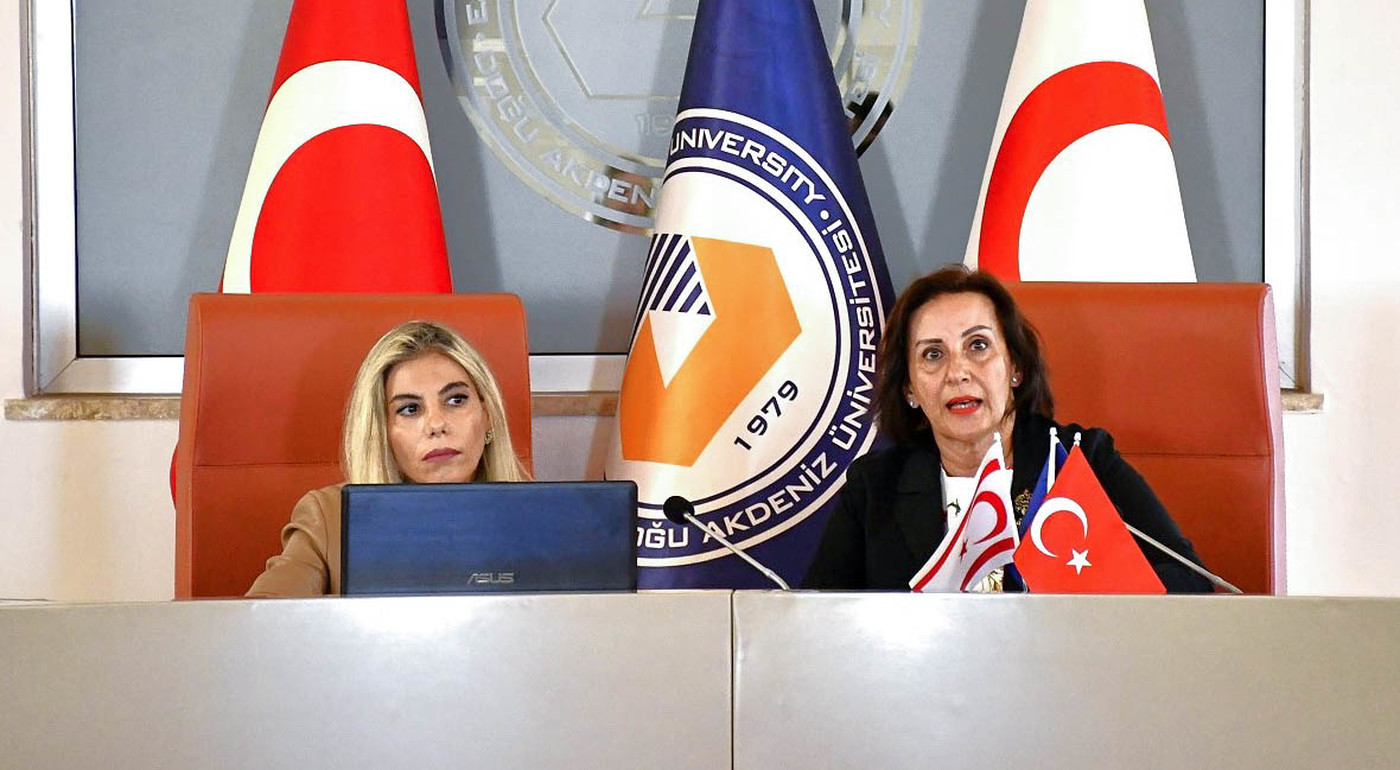
Turkish Republic of Northern Cyprus Immovable Property Commission Chair Növber Ferit Veçhi and the General Secretary of the Commission Nahide Akyüzlü Aylanç visited Eastern Mediterranean University (EMU) and delivered a presentation titled “Operating Principles of the Immovable Property Commission and the Latest Developments” for the EMU Senate Members. The presentation was attended by EMU Rector Prof. Dr. Hasan Kılıç and Vice Rectors Prof. Dr. Osman M. Karatepe, Prof. Dr. Salih Katırıcoğlu and Prof. Dr. Ali Öztüren.
Making an address before the presentation, Prof. Dr. Kılıç expressed the university’s contentment on hosting the Chair and General Secretary of the Immovable Property Commission at EMU. Prof. Dr. Kılıç welcomed Veçhi and Aylanç on behalf of Senate Members.
In her presentation, Aylanç provided information regarding the Immovable Property Commission, presenting insights on the establishment and operating principles of the commission as well as the ongoing cases and current initiatives.
“The Available Options include Compensation, Refund, or Exchange”
In her presentation, Veçhi detailed the application process and procedures of the Immovable Property Commission, mentioning that applicants can choose from three options: compensation, refund, or exchange, with most opting for compensation. Pointing out that applications are accepted in multiple languages and provided guidance on the necessary steps for submission, Veçhi also shared information about both resolved and pending cases, underscoring that the total number of applications has reached 8,160.
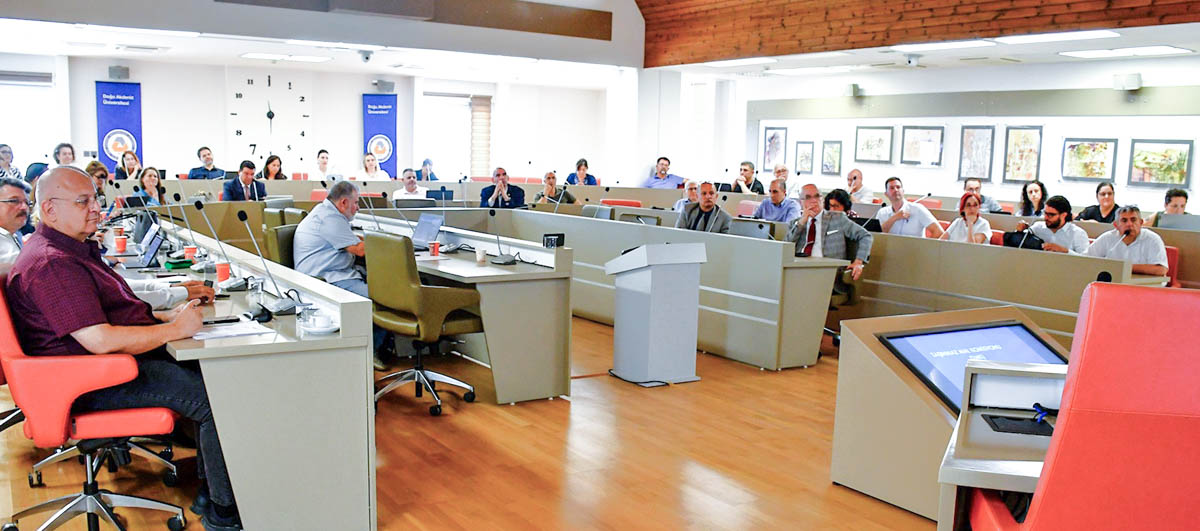
In the question-answer session, the topic of property was thoroughly discussed, addressing numerous questions from attendees. When asked about Turkish Cypriots who signed waivers and acquired properties in Northern Cyprus in exchange for those they left behind in Southern Cyprus, and what happens when Greek Cypriots apply to the Immovable Property Commission regarding such properties, Veçhi clarified that whether or not equivalent property is offered is irrelevant. She stressed that, in these cases, restitution is usually not granted, and compensation is typically provided instead. Furthermore, Veçhi stated that if the property is within the territory of the Turkish Republic of Northern Cyprus, the issue of restitution is subject to negotiations between the concerned parties.
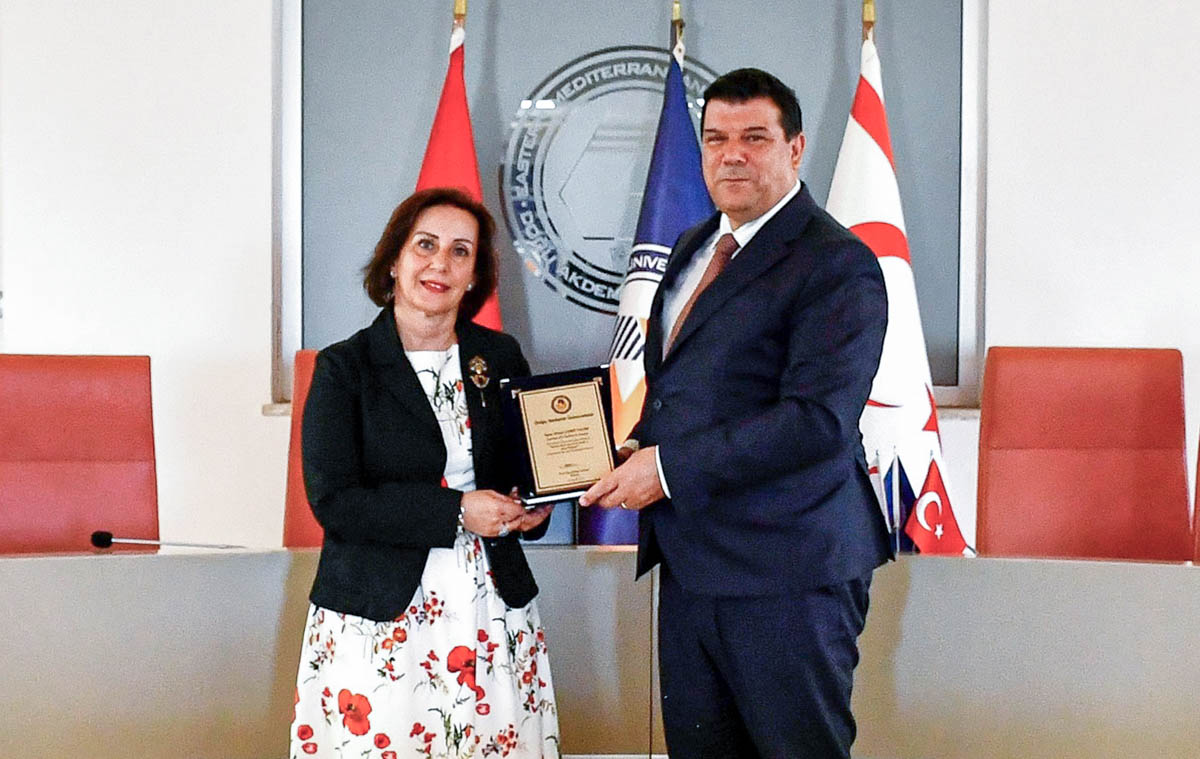
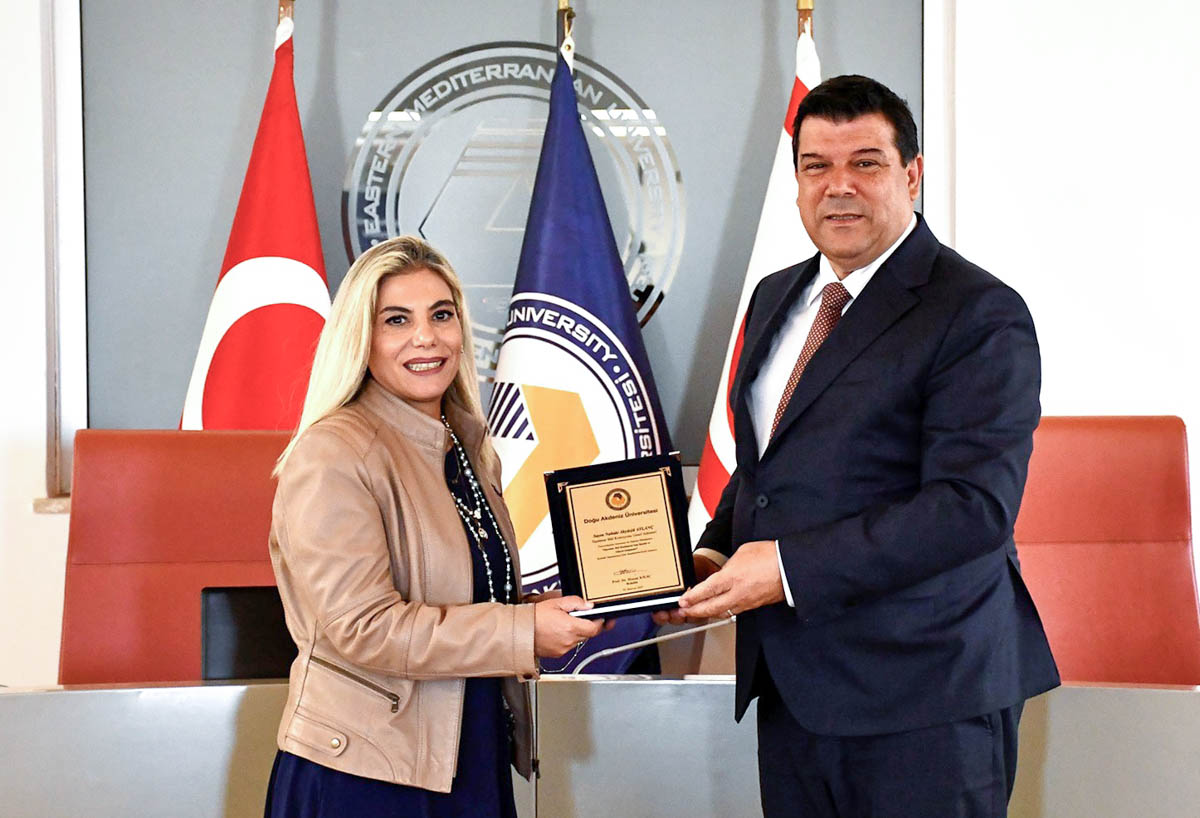
On the other hand, addressing the question about what happened to the properties left by Turkish Cypriots who moved from Southern to Northern Cyprus, Veçhi explained that these properties have not been reassigned and still remain registered in the names of the original owners. At the end of the presentation, Prof. Dr. Kılıç honoured Veçhi and Aylanç with plaques of appreciation in recognition of their contributions.